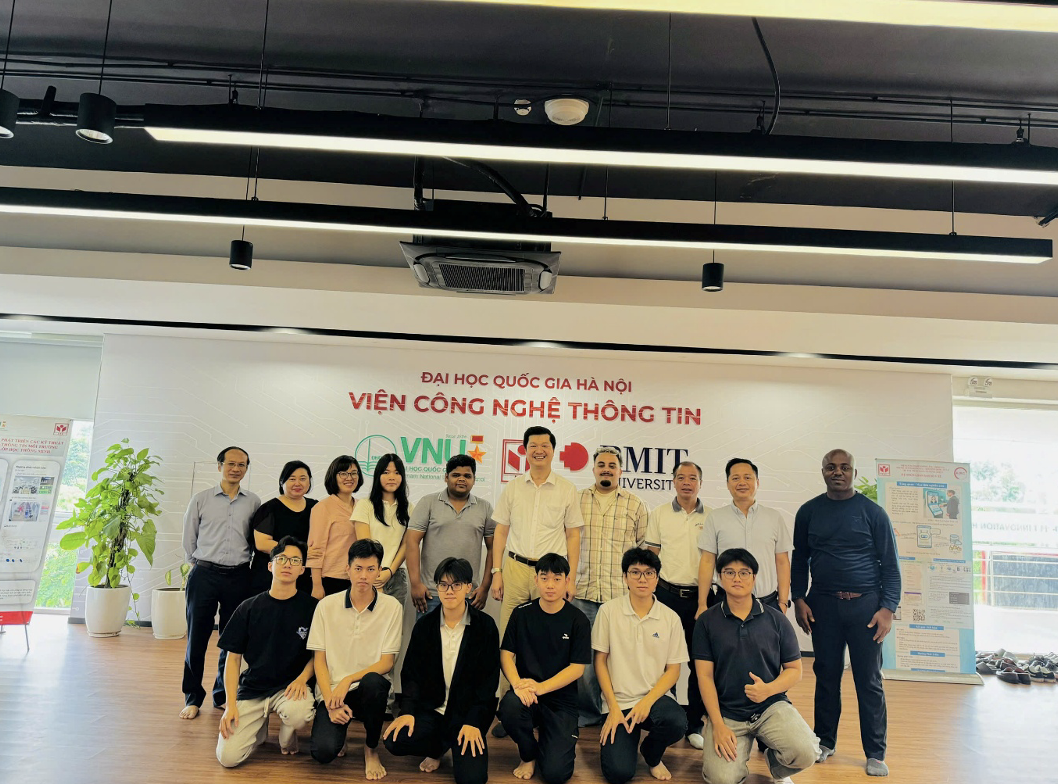
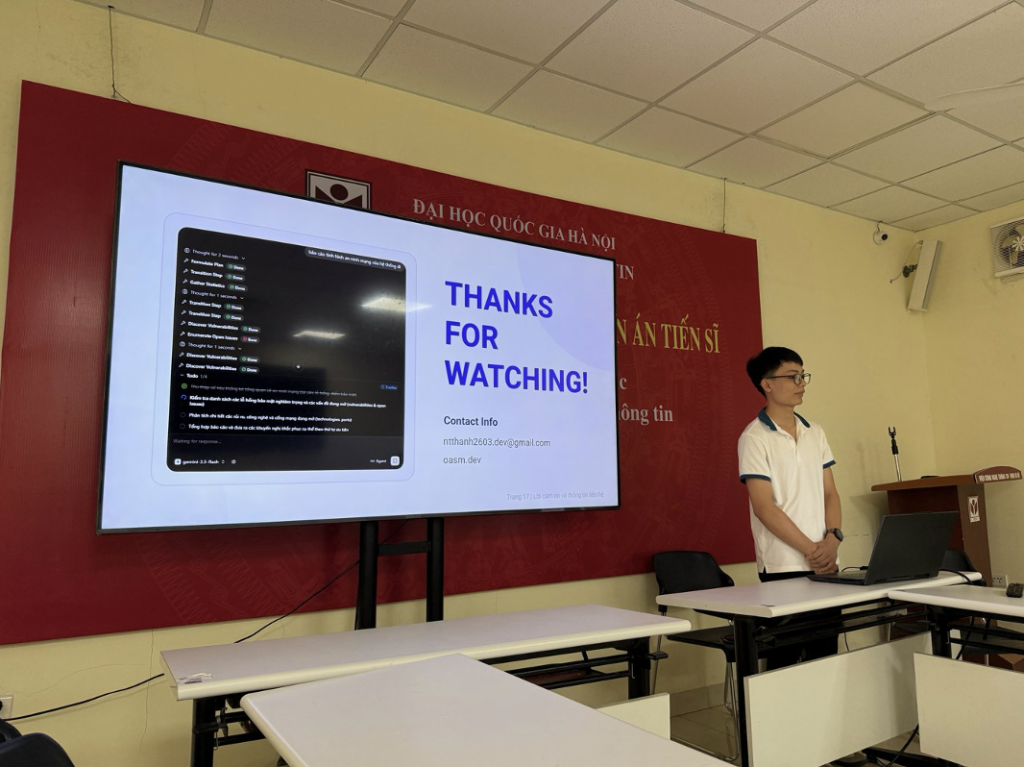
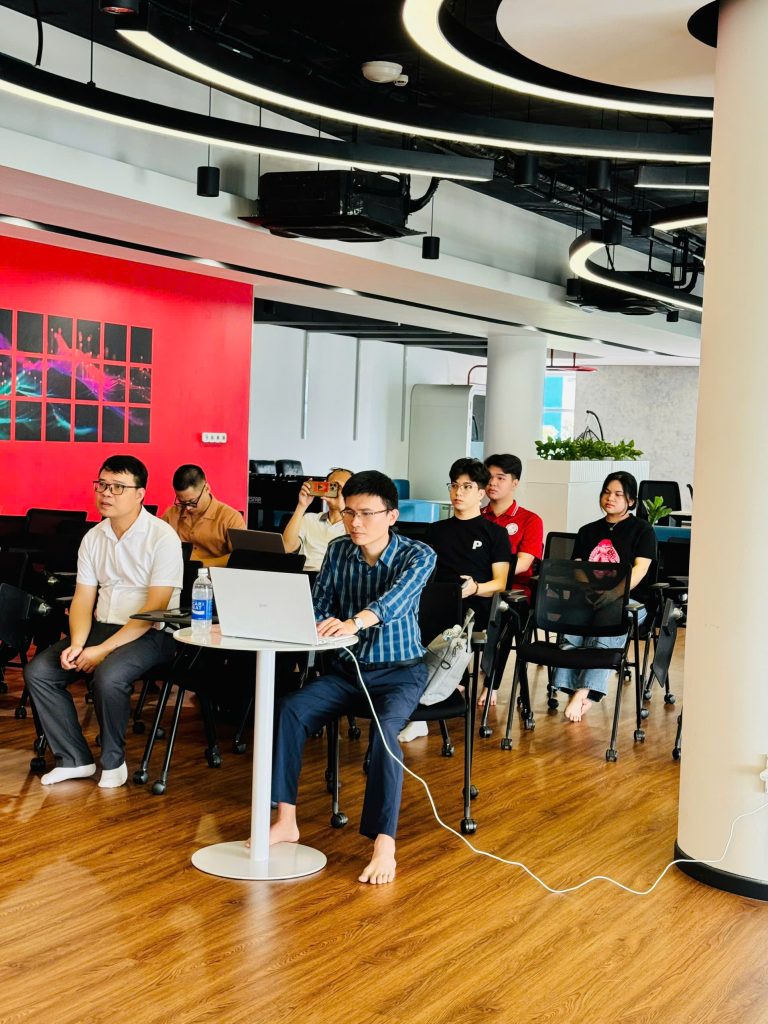
On July 15, 2026, the Information Technology Institute (VNU-ITI), Vietnam National University, Hanoi (VNU), organized a seminar on strategic technologies, focusing on the application of Artificial Intelligence (AI) in large-scale AI camera systems for agriculture and Agentic AI in education. The seminar was held at the VNU-RMIT Innovation Hub in a hybrid format, allowing participants to attend both in person and online. The event was chaired by Associate Professor Dr. Lê Hoàng Sơn, Vice Director of the Institute, and attracted the participation of numerous researchers, faculty members, doctoral candidates, and students interested in these emerging technologies.
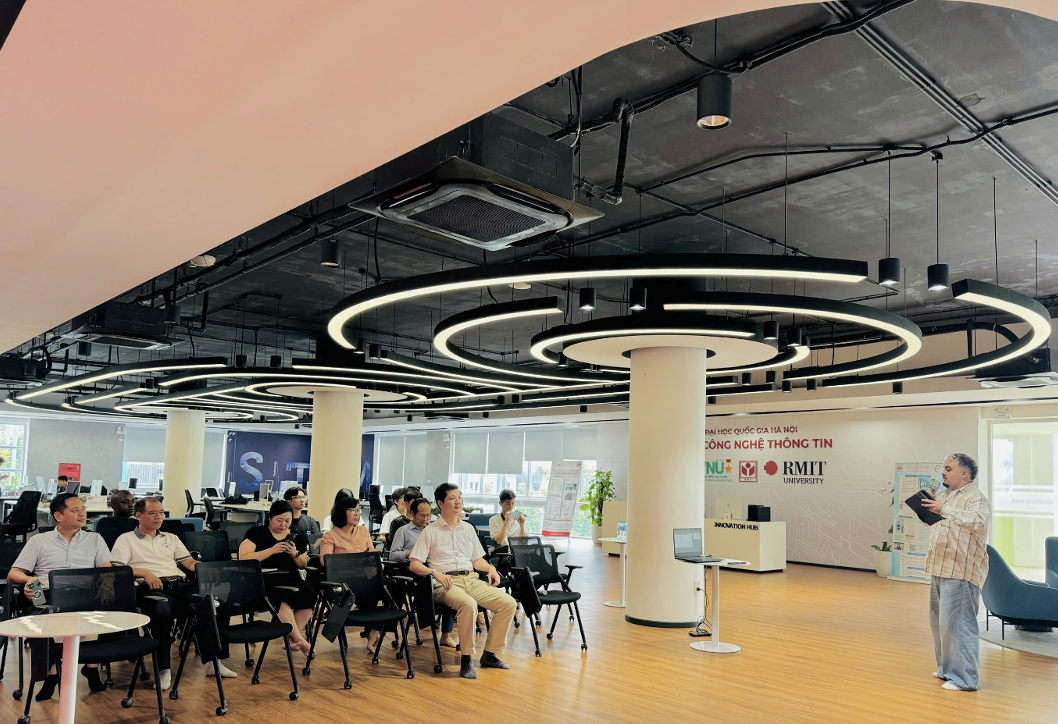
The first presentation was delivered by Engineer Micipssa Djaroun from Junia ISEN, France, focusing on the application of Agentic Artificial Intelligence (Agentic AI) in education. The presentation highlighted personalized AI mechanisms that enable intelligent systems to adapt continuously to individual learners during operation without requiring the underlying model to be retrained. Rather than updating model parameters, the system dynamically adjusts user performance states, reasoning strategies, and response evaluation criteria based on learners’ interaction histories.
The proposed Agentic AI framework operates across three levels: universal, goal-oriented, and specialized (including personalized guidance). Its primary objective is to predict students’ weekly dropout risk using online learning data. Based on these predictions, the system categorizes students into different levels of support and generates tailored intervention strategies. A structured intervention framework, powered by a locally deployed Large Language Model (LLM), provides instructors with interpretable recommendations and decision-support information while maintaining human oversight throughout the educational process.
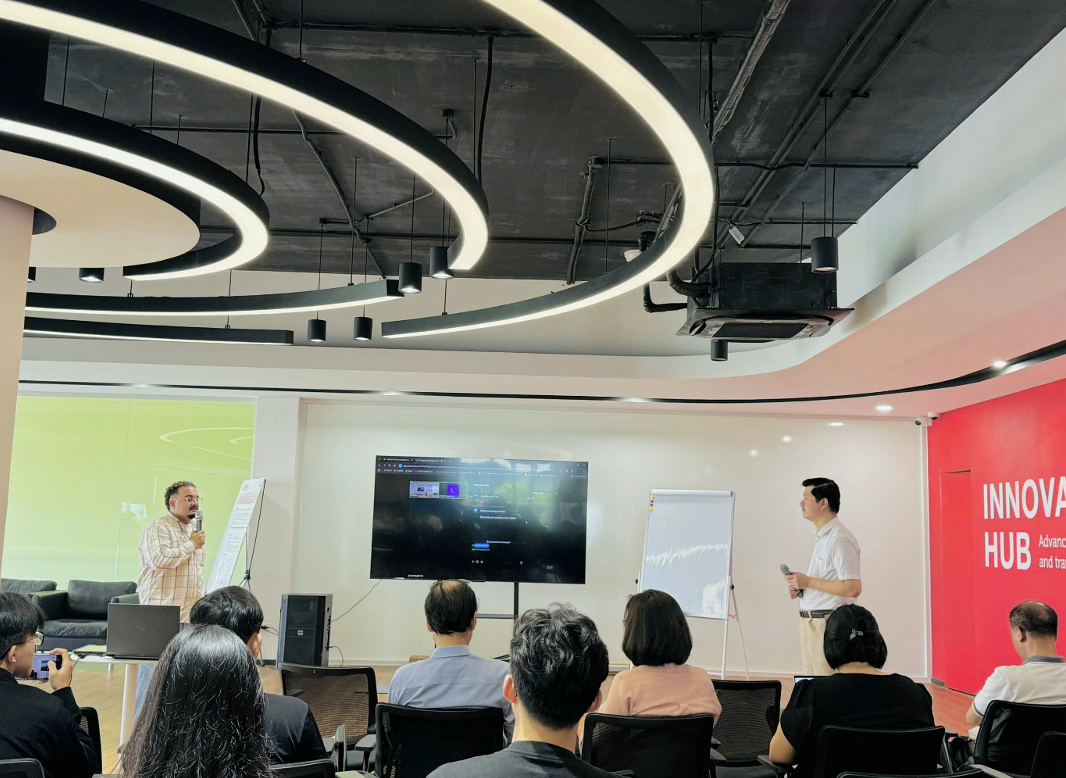
The Agentic AI architecture was further analyzed through its core components, including input perception, short-term and long-term memory, planning and reasoning mechanisms, action execution, and self-evaluation and adaptation capabilities. This architecture enhances personalization while reducing computational costs and contributing to the protection of learners’ data privacy. The system’s potential long-term impact on education and student development underscores the significance of this research, while its real-time implementation paves the way for practical applications in intelligent learning environments.
The second presentation was delivered by doctoral researcher Siddhant Sahare from Krishna Institute of Engineering, India, focusing on pest and disease detection using UAV-mounted camera data. Traditional manual inspection of crop fields is labor-intensive, time-consuming, and often results in delayed disease detection, which can ultimately lead to significant crop damage or loss. The primary technical challenge lies in accurately detecting subtle environmental changes and early signs of crop diseases while ensuring minimal latency in disease identification. To address this challenge, the research team incorporated vegetation indices associated with disease-causing weeds to facilitate their identification and classification, thereby enabling deep learning models to be trained and deployed more effectively.
The proposed large-scale AI camera system for agriculture consists of three key stages: UAV-based field mapping, image acquisition and object detection through onboard cameras, and crop disease identification. Subsequently, image segmentation techniques are applied to separate crops from the background soil, enabling more accurate disease detection. This approach allows the deep learning model to classify crop conditions and localize nutrient-deficient areas more effectively. Experimental results demonstrate that the system is capable of real-time operation while maintaining robust recognition performance across diverse agricultural scenarios. Furthermore, it supports the timely detection and prevention of crop stress and diseases, significantly reducing the need for manual inspection while improving agricultural efficiency and productivity.
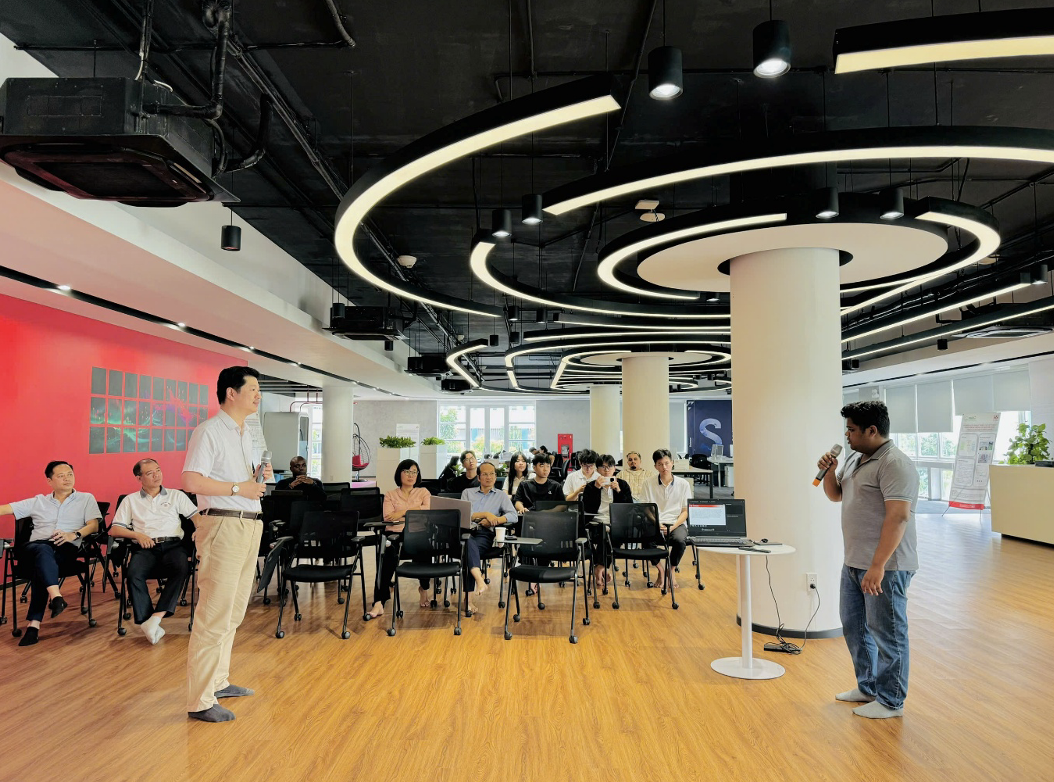
This research represents a significant contribution to the advancement of precision agriculture, smart farming infrastructure, and large-scale crop monitoring systems. Crop pest and disease detection extends beyond the development of sophisticated algorithms; it also requires spatial consistency across geographical areas, the integration of multiple sensing modalities—including RGB, multispectral imagery, and vegetation indices—and the ability to scale efficiently as farm sizes and UAV fleet coverage increase. This line of research lays a fundamental foundation for next-generation AI systems capable of large-scale agricultural perception, transforming the perspective of a single unmanned aerial vehicle into a continuously updated, farm-wide overview of crop health, thereby enabling automated interventions at scale.
Associate Professor Dr. Lê Hoàng Sơn remarked that although the two presentations addressed different application domains, they both reflected the Information Technology Institute’s current strategic research directions. These include the development of artificial intelligence systems capable of understanding complex data, maintaining long-term memory, performing multi-step reasoning, and adapting to dynamic environments in real time. Such capabilities provide the technological foundation for future intelligent monitoring systems, personalized learning assistants, decision-support systems, and digital twin models.
In his closing remarks, Associate Professor Dr. Lê Hoàng Sơn commended both presentations for their academic depth and relevance to current technological developments. He emphasized the importance of promoting interdisciplinary research and strengthening both domestic and international collaborations to advance strategic AI technologies with high scientific value and practical impact, thereby supporting the long-term research and innovation objectives of the Information Technology Institute.