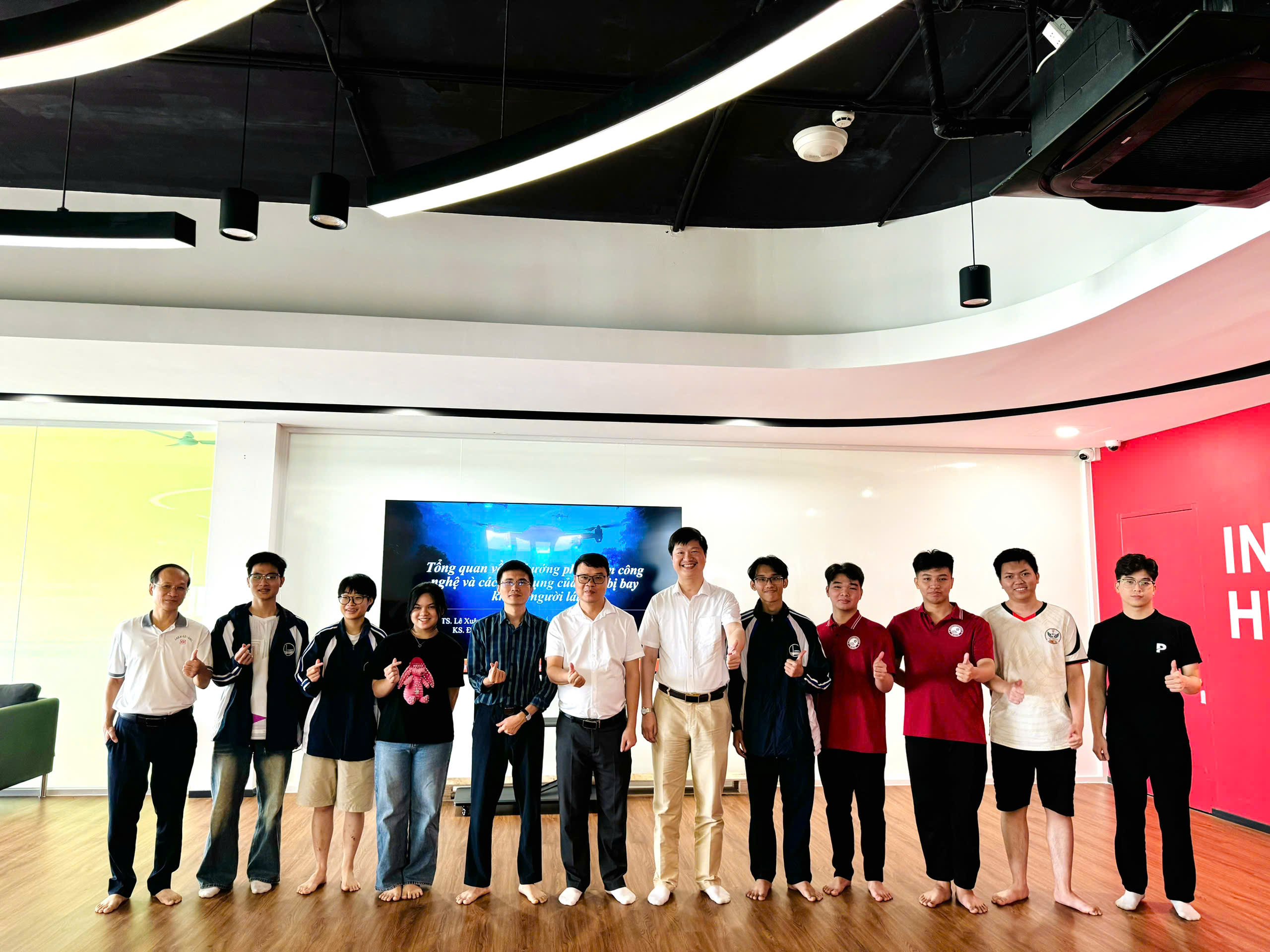
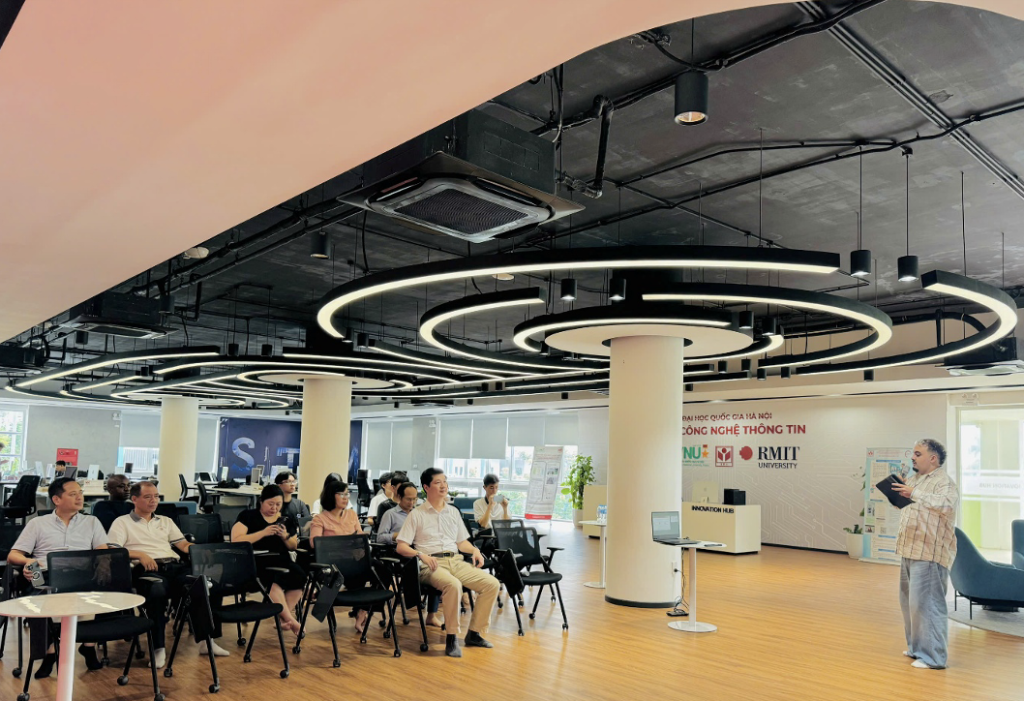
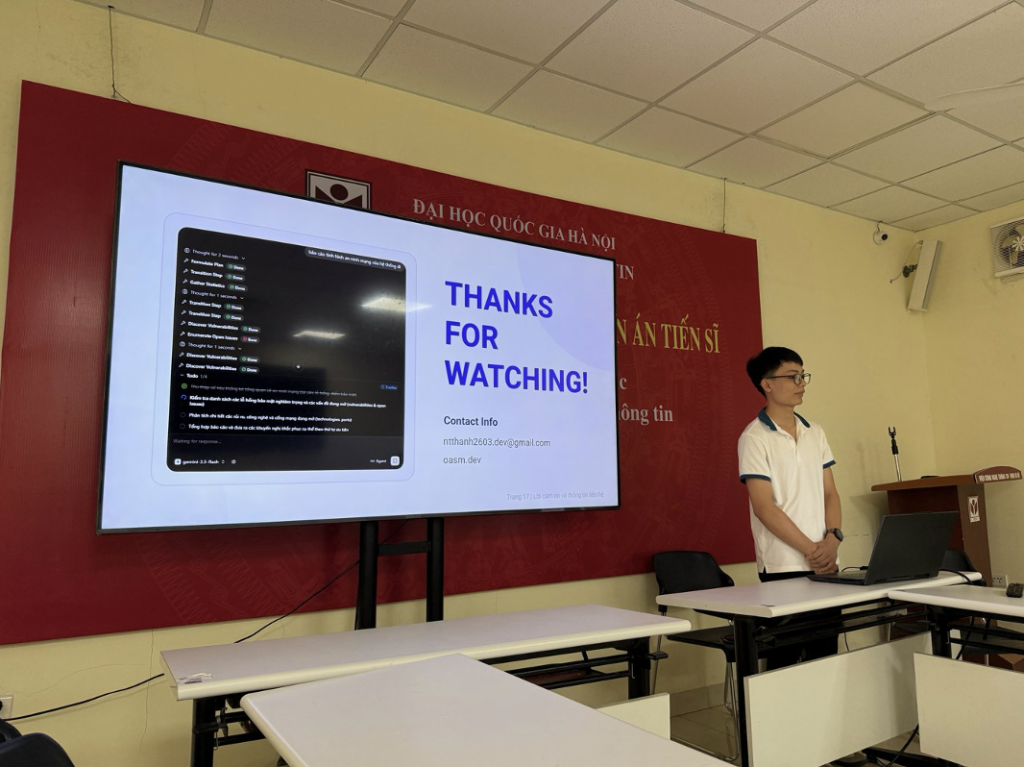
On Tuesday morning, June 2, 2026, the Institute of Information Technology (ITI) organized a seminar on UAV technology oriented toward green energy. This is a monthly regular seminar held at the Institute to research, implement, and test strategic technologies in line with Decision No. 808/QD-TTg, issued on May 6, 2026, by the Prime Minister assigning tasks for strategic technology development. The event took place at the VNU-RMIT Innovation Hub, located within the Vietnam National University, Hanoi (VNU) Urban Area in Hoa Lac. The seminar was attended by Assoc. Prof. Dr. Le Hoang Son – Vice Director of ITI, and Dr. Le Xuan Hai – AIoT Expert from VNU International School, alongside a large number of scientists, lecturers, and students who actively participated in discussing the contents of the in-depth reports.
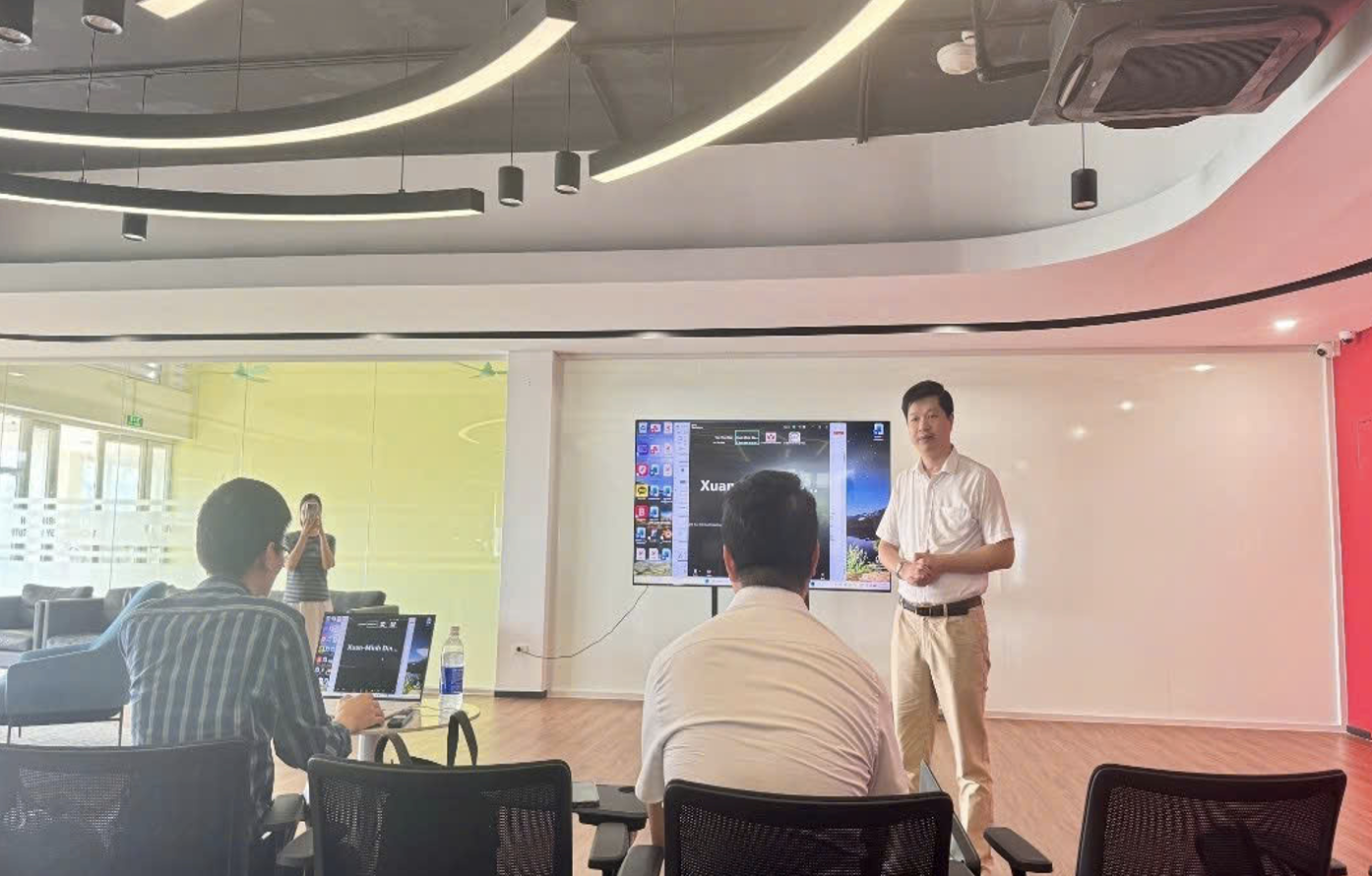
Delivering the opening remarks at the event, Assoc. Prof. Dr. Le Hoang Son highly appreciated the efforts of the scientists and the AIoT research team in shaping strategic technology research related to unmanned aerial vehicles (UAVs) oriented toward green energy. He emphasized that this has been one of the core development directions for strategic technology at the Institute of Information Technology (ITI) recently. This direction integrates advanced Artificial Intelligence (AI) techniques onto IoT devices for edge computing, while leveraging available resources to generate operational power for the entire system amid energy shortages driven by the demands of AI computing centers. Green AI is becoming an irreversible trend in developing sustainable, low-power AI models powered by renewable energy. Furthermore, the Institute of Information Technology offers scholarship programs for PhD candidates and research fellows participating in these research topics, while providing an open research environment at the VNU-RMIT Innovation Hub to facilitate and accelerate the realization of innovative ideas.
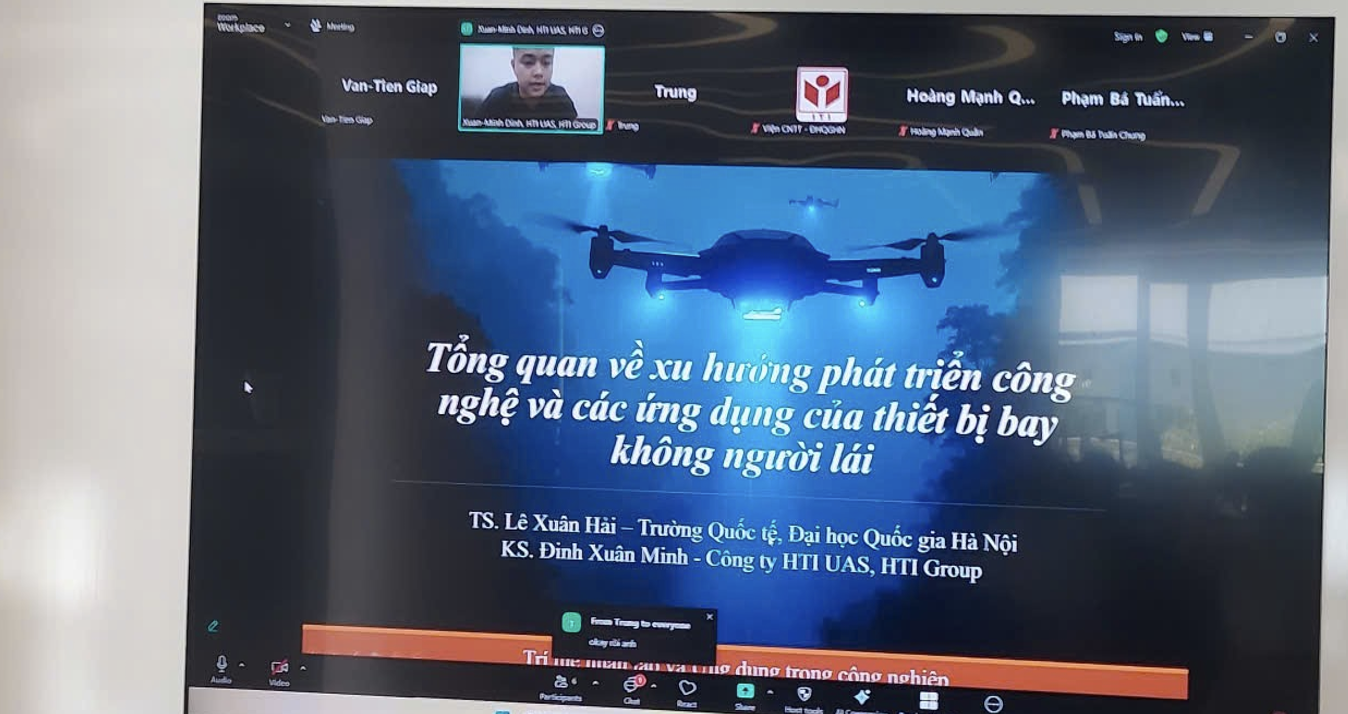
Opening the program, Mr. Dinh Xuan Minh (Engineer, HTI Group) presented an overview of technological development trends and applications of unmanned aerial vehicles (UAVs). The presentation clarified core technologies such as autonomous control, artificial intelligence (AI), computer vision, and GPS-denied navigation, while providing an in-depth analysis of prominent UAV applications in smart agriculture, infrastructure monitoring, search and rescue, and smart cities. Live demonstrations conducted on both land and river successfully demonstrated the feasibility of deploying this technology in defense, security, and various related fields.
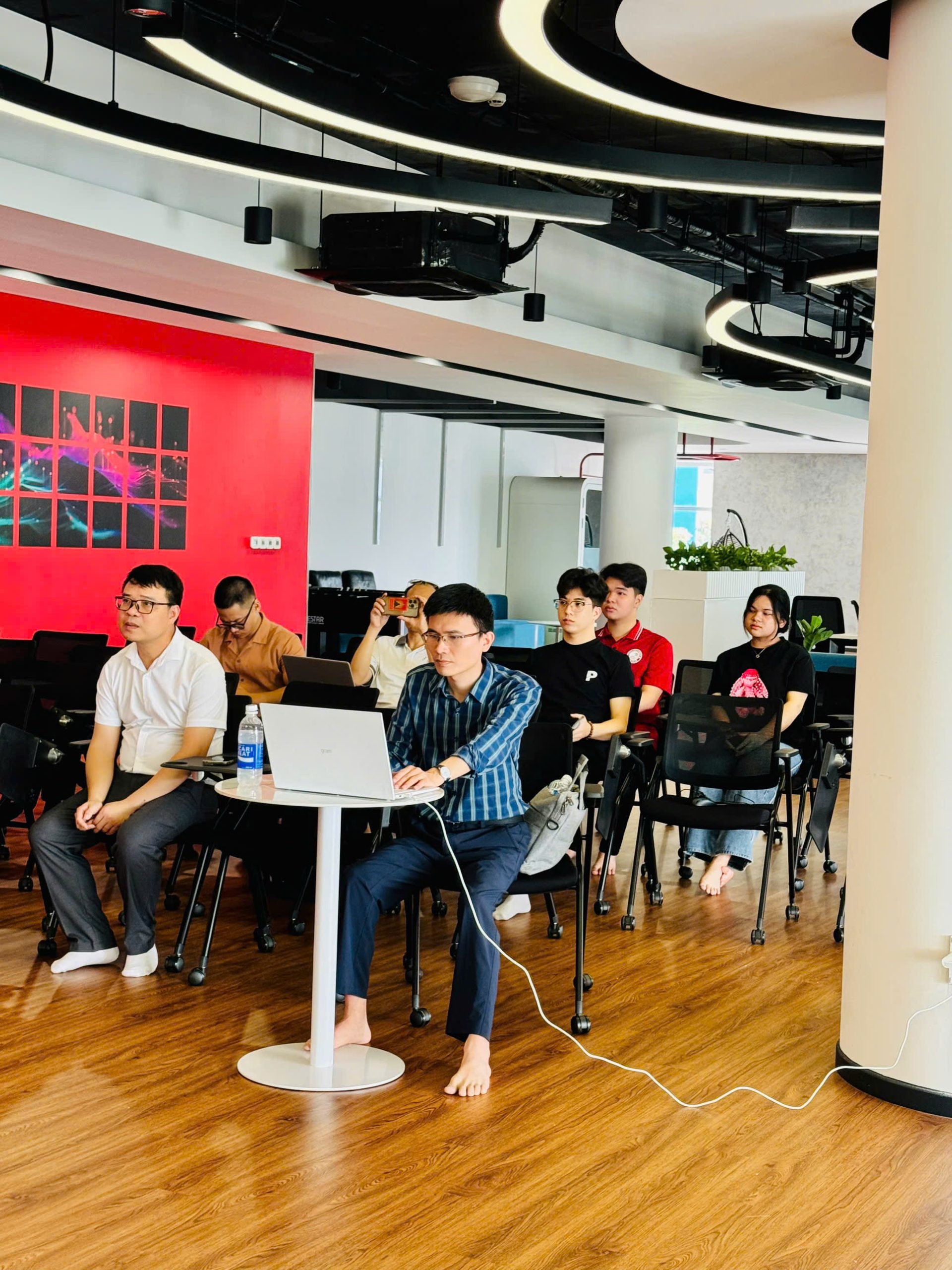
In the next presentation, Dr. Giap Van Tien, a lecturer at the Faculty of Engineering & Technology, VNU International School, discussed methods for low-cost green hydrogen production by combining solar power with municipal solid waste-to-energy. Dr. Tien proposed a breakthrough solution by integrating waste-to-energy power into a Solid Oxide Electrolyzer Cell (SOEC) system. This approach not only helps stabilize the power supply and extend the system’s lifespan but also opens up great prospects for clean energy production at optimized costs in Vietnam.
Concluding the presentation session, the speakers delivered fresh insights with high technical depth, practical value, and applicability. The fact that the event was hosted at a modern creative space like the VNU-RMIT Innovation Hub further underscored the spirit of academia closely linked with practice and innovation. This event provided not only students, trainees, and PhD candidates but also corporate research teams with an opportunity for direct exchange with VNU scientists. The professional achievements shared were not only a reflection of the presenters’ individual efforts but also demonstrated the right research direction being implemented by the Institute of Information Technology, enabling scientists and students to effectively approach cutting-edge technological problems.